our story
Our work spans theatre, literature, and live art, with past projects including Pretty Baby Child (National Theatre Studios), Rift (Immediate Theatre), and The Room Where It Happens (UCL East x The Yard Theatre). We have collaborated with leading institutions such as the Bush Theatre, Almeida Theatre, Royal Court Theatre, Punchdrunk Enrichment, Penguin Random House, and Doctor Who x BBC Books. Rooted in the philosophy that "two brains are better than one," we prioritise nourishing creative processes and amplifying voices from historically overlooked communities.
meet the visionaries ✨
-

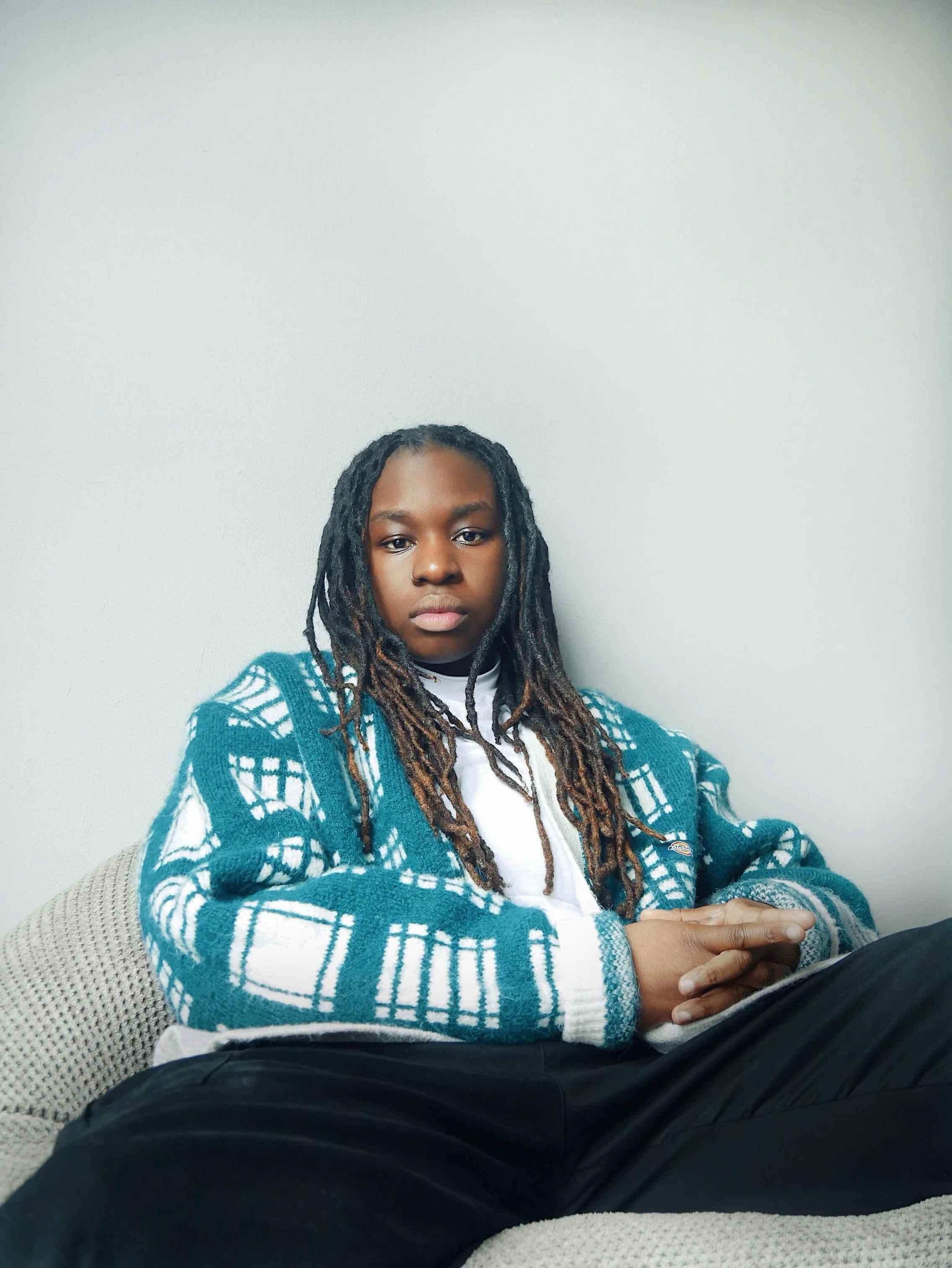
Abi
VISION DIRECTOR
Abi Falase is a writer, director, and facilitator whose work creates transformative, escapist experiences for audiences seeking both authenticity and mysticism. Central to their creative practice is the idea of collective liberation through creative expression, a principle they bring to life in their work by blending feel-good social realism with satire.As a director and writer, Abi has quickly built a notable body of work at major UK institutions. They were the writer/director of The Endz (Southbank Centre, 2023), a musical that earned the Royal Philharmonic Society Impact Award, and authored the Doctor Who adventure novel Eden Rebellion (BBC Books/Penguin Random House, 2024). Recent directing and dramaturgy credits include an R&D at the National Theatre Studio (Pretty Baby Child, 2025), The Cocoa Butter Club (Sankofa, 2026) and a devised piece for The Yard & UCL Here East (The Room Where it Happens, 2025). Their literary versatility is further evidenced by being shortlisted for the BBC Scriptworks Thousand Films Competition.
Abi’s expertise extends deeply into facilitation and youth programme design. Over four years as Participation Associate at the Almeida Theatre (2019-2023), they were the Creative Lead for the Young Artist Programme, going on to design and deliver courses for the National Theatre and serve as Lead Artist for The Yard Theatre (2024).
Whether writing, directing or facilitating alternative education, Abi Falase centres young people and the transformative power of collective creativity.
-

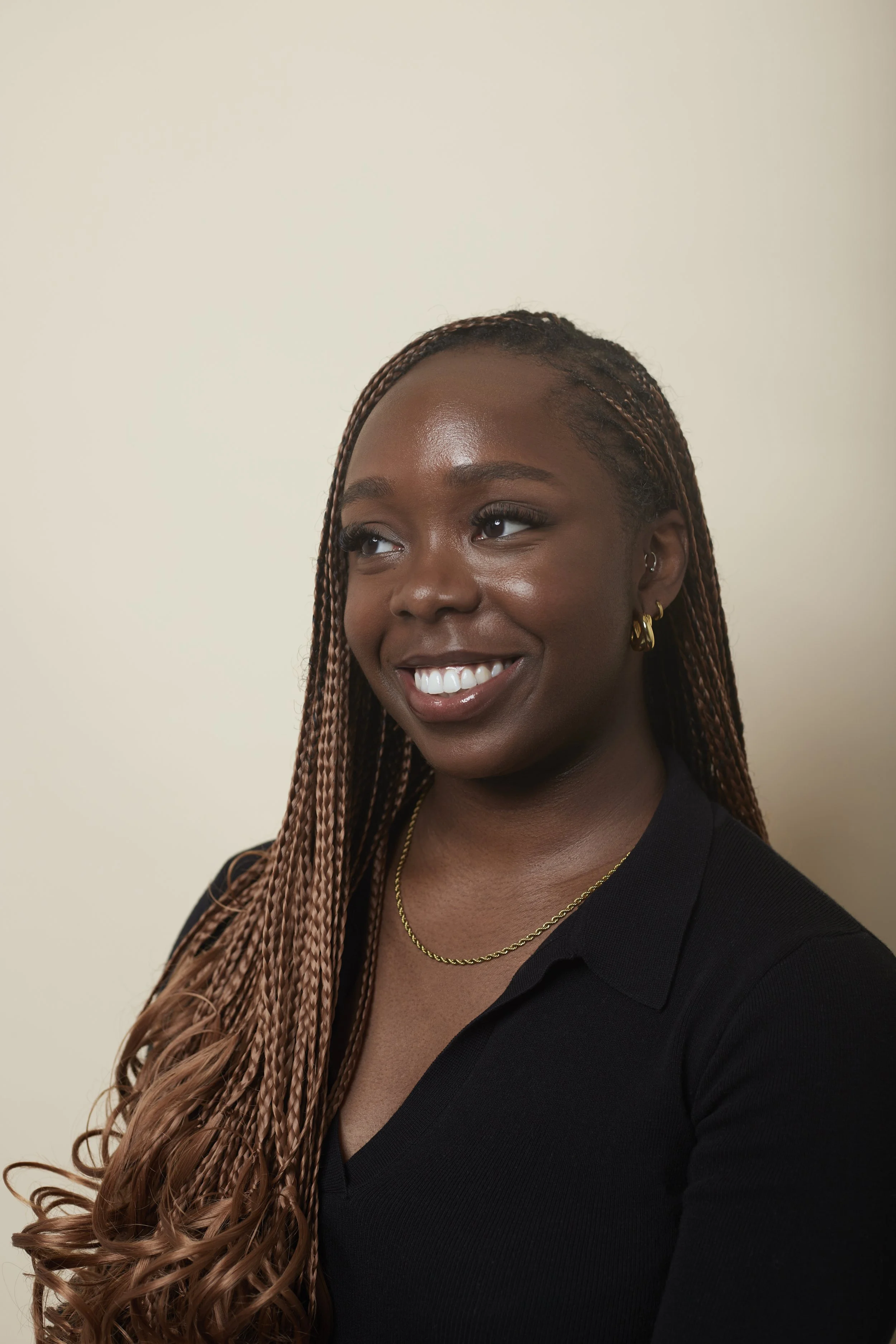
Táiyé
VISION CURATOR
Táiyé is a London-based interdisciplinary artist and theatre-maker whose work spans writing, directing, dramaturgy, producing, and facilitation. Across theatre, literature, and arts and heritage, Táiyé opens portals for communities to engage with afro-futurity, intimacy, and care. Their practice is unified by a commitment to centring historically overlooked communities, working intuitively with the elasticity of language and art to interrogate the world through their lived experience.As a director, Táiyé has worked with leading institutions in the UK and internationally, including the Almeida Theatre, Bush Theatre, Riksteatern (Sweden), Talawa Theatre Company, and The Yard Theatre. Notable credits include the Swedish adaptation of Shifters (Bush Theatre/Riksteatern, 2026), 1536 at the Almeida (dir. Lyndsey Turner), and here, here, here (dir. Katie Greenall) at Stratford East. As a writer, they have also brought their own written work to life with Theatre 503, The Poetry Society, the Almeida's Anthem Writers programme, and Talawa Theatre Company's TYPT 21/22 programme as well as writing reviews and criticism for The British Blacklist and The Rendition.
Táiyé has a strong track record of facilitating the early development of bold new plays, producing R&D workshops for Samuel Takes A Break... by Rhianna Ilube (shortlisted for the Susan Smith Blackburn Prize), Multiple Casualty Incident by Sami Ibrahim (shortlisted for the George Devine Award) and Black Pride by Troy Hunter. This commitment to nurturing work from its earliest stages extends into their dramaturgy practice, with ongoing sessions for DINKS by Abi Falase and R&D dramaturgy for Pretty Baby Child by Simon Harris.
Driven by a belief in the transformative and connective nature of storytelling, Táiyé makes space for voices that are too often sidelined and builds the stages, pages, and rooms where they can truly be centred.
why
“second brain”?
A term once affectionately used by Abi to describe Táiyé’s role in the room during our first time working together, it soon became the name to christen our working relationship.
To us, Second Brain means, another person to bounce an idea off of, it means you play to your strengths and I’ll play to mine, it means two heads are always better than one. It means double the trouble and the double the heart.
We take turns serving as each other’s ’Second Brain’ diligently supporting the growth of projects the other is energised by.
our story…
Within our growing friendship, the kitchen was a site for creativity and food quickly became a love language for us - we would dream about the projects we wanted to make over a bowls of katsu curry and sweet chilli chicken, we’d passionately scheme our take over of the arts industry, gyros in hand. It then feels natural for food to be the language for which we use to describe our work -the menu, became our list of offerings, cooking, our process of creation and so on.
Food also plays a significant role in our rooms - we are keen on a communal lunch on the last day of working with each other, breaking bread reflecting over our time together. A hobby baker, Táiyé is known to bring a baked good in for a press night or if someone needs a pick me up. We are also known to be very partial to a working brunch in the room (shout out Deliveroo!)
Food is nourishing and we desire to create work and work in a way that is nourishing for ourselves and our communities. We don’t play about advocating for that too -we always want what you need.
If you want to go fast, go alone, if you want to go far, go together.
🤝🏾
African Proverb
✨ Our shared + combined gifts + skills, allows us to fulfil our passion for supporting individuals + communities from historically overlooked communities* reach the fullness of their creative potential ✨
* By our definition, historically overlooked communities are groups that were (and some continue to be) denied full participation in mainstream cultural, social, political, and economic activities. This can include Black people, people of colour, women, LGBTQIA+, low-income individuals, prisoners, the disabled, young people, senior citizens, and many more.